

Incubators and Warm Rooms: Design and Qualification
Incubators and warm rooms provide controlled thermal environments for microbiological testing, laboratory operations, biological processes, material conditioning, sample storage, and other pharmaceutical applications requiring temperatures at or above the surrounding environment. Some systems also control carbon dioxide, relative humidity, oxygen, agitation, refrigeration, or other parameters.
The required operating conditions must come from the approved test method, process, material requirement, or study protocol. No single temperature range applies to all microbiological samples, environmental-monitoring plates, growth-promotion studies, biological cultures, or conditioned materials. Equipment qualification should demonstrate that the incubator or warm room can provide the defined operating environment; it does not establish that the microbiological method, incubation scheme, or biological process is scientifically suitable.
This article addresses equipment design, heating, airflow, controls, optional environmental parameters, qualification, temperature mapping, alarms, failure testing, cleaning, monitoring, and equipment-specific requalification. General mapping methodology is addressed in Thermal Mapping Study Design and Qualification Strategy.
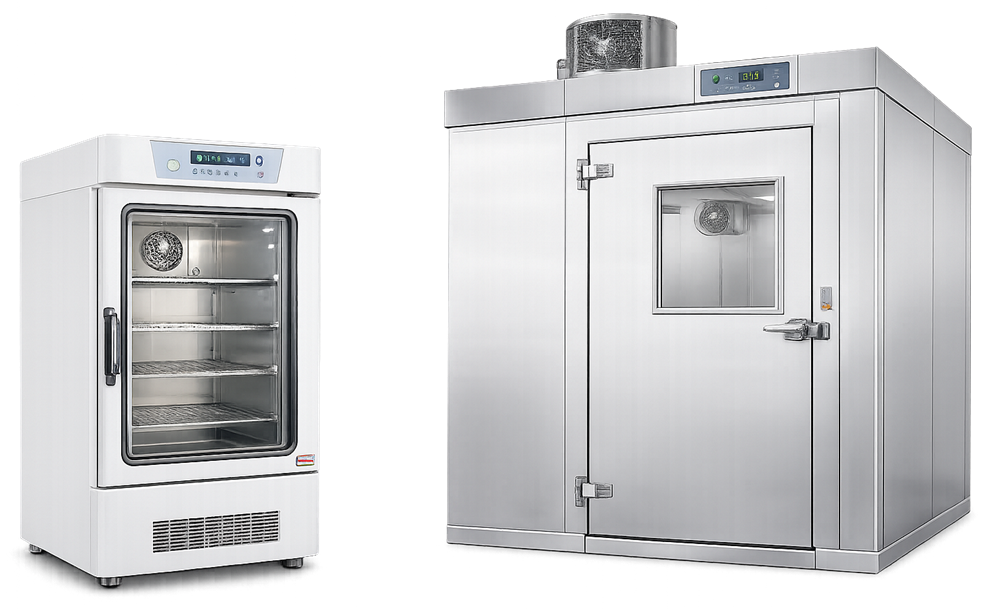
Laboratory incubators and walk-in warm rooms provide controlled elevated-temperature environments at different scales and require qualification appropriate to their design and intended use.
Intended Use and System Boundary
Qualification begins with a defined intended use. The intended-use statement should identify:
- Materials, samples, cultures, or equipment to be incubated
- Applicable test method, process, or study
- Required temperature range
- Required relative humidity where applicable
- Required carbon-dioxide concentration where applicable
- Required oxygen condition where applicable
- Required agitation where applicable
- Required operating duration
- Chamber or room capacity
- Expected loading configuration
- Minimum and maximum routine load
- Expected door-opening frequency
- Required recovery performance
- Required alarms
- Independent monitoring requirements
- Electronic-record requirements
- Backup-power expectations
- Contingency arrangements
- Cleaning and disinfection requirements
- Contamination-control expectations
- Access-control requirements
The system boundary should include the equipment, utilities, sensors, controls, monitoring, alarms, load supports, and procedures needed to maintain and document the approved condition.
Depending on the system, the boundary may include:
- Chamber or insulated room enclosure
- Shelves, racks, drawers, or platforms
- Heating elements
- Heating coils
- Refrigeration equipment
- Circulation fans
- Dampers and ducts
- Control sensors
- Independent monitoring sensors
- Overtemperature-protection devices
- Humidity-generation system
- Carbon-dioxide supply and control
- Oxygen or nitrogen supply
- Shaking platform and drive
- Local controller
- Remote monitoring interface
- Data-acquisition software
- Electrical supply
- Emergency power
- Water supply and drain
- Door switches and alarms
- Associated procedures
21 CFR 211.63 requires equipment to be appropriately designed, adequately sized, and suitably located for its intended use, cleaning, and maintenance.
Equipment Types
Incubation equipment differs substantially in size, heat-transfer mechanism, controlled parameters, airflow, access, contamination risk, and failure behavior.
Gravity-Convection Incubators
Gravity-convection incubators depend primarily on natural movement of heated air. Air warmed near the heating surfaces becomes less dense and rises, while cooler air descends.
Advantages may include:
- Simple construction
- Limited mechanical disturbance
- No circulation fan
- Reduced risk of fan-generated vibration
- Lower mechanical complexity
Potential limitations include:
- Greater vertical stratification
- Slower recovery
- Greater sensitivity to shelf loading
- Greater temperature differences between locations
- Less predictable airflow around dense loads
Gravity convection should not be described as inferior automatically. Its suitability depends on the required operating range, chamber size, load, method, and demonstrated distribution.
Mechanical-Convection Incubators
Mechanical-convection incubators use one or more fans to circulate heated air through the chamber. Potential advantages include:
- Improved mixing
- Reduced stratification
- Faster recovery
- More consistent shelf-to-shelf conditions
- Improved response to changing loads
Potential limitations include:
- Fan failure
- Airflow obstruction
- Localized high velocity
- Increased evaporation from open or permeable containers
- Vibration
- Greater dependence on internal ducting and load arrangement
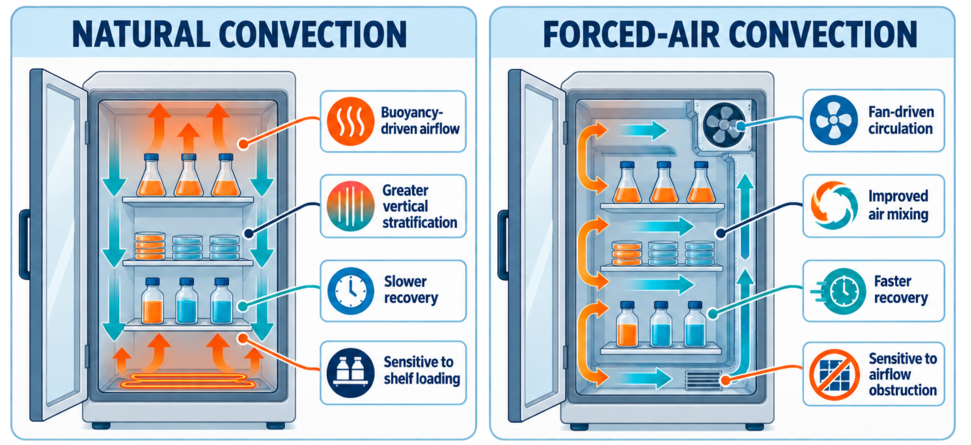
Natural-convection and forced-air incubators distribute heat differently, producing different temperature patterns, recovery behavior, and loading sensitivities.
Refrigerated Incubators
Refrigerated incubators can operate below, near, or above ambient temperature using integrated heating and refrigeration.
Their qualification should address:
- Heating operation
- Cooling operation
- Transition between heating and cooling
- Compressor cycling
- Defrost where applicable
- Condensation
- Performance near ambient temperature
- Control instability or deadband between modes
- Failure of either heating or cooling
An incubator operating close to room temperature may be challenging because the system has little natural heating or cooling differential and may alternate between operating modes.
CO₂ Incubators
CO₂ incubators are generally used for cell-culture applications. In addition to temperature, they may control:
- Carbon-dioxide concentration
- Relative humidity
- Oxygen concentration
- Chamber pressure or gas flow
- Water-pan condition
CO₂ may be measured through infrared or thermal-conductivity technologies. Sensor behavior can be influenced by temperature, humidity, pressure, altitude, and chamber conditions.
Qualification of the chamber does not establish suitability of a cell-culture method, media, organism, cell line, or incubation period.
Humidity-Controlled Incubators
Humidity may be generated through:
- Water pans
- Heated reservoirs
- Steam generation
- Atomization
- Controlled air mixing
- Other manufacturer-specific methods
Humidity control introduces additional risks:
- Condensation
- Water quality
- Reservoir contamination
- Scale formation
- Humidity-sensor drift
- Drainage problems
- Microbial growth
- Uneven distribution
Humidity should be qualified only when it is an intended controlled parameter. The presence of a water pan does not necessarily mean that relative humidity is actively controlled.
Shaking Incubators
Shaking incubators combine temperature control with orbital or reciprocal motion.
Qualification may include:
- Temperature distribution
- Speed range
- Speed accuracy
- Orbit or stroke
- Platform security
- Load balance
- Maximum approved load
- Vibration
- Door or lid interlocks
- Speed recovery
- Temperature behavior during agitation
- Alarm response
Temperature and agitation may interact. A heavily loaded moving platform can alter airflow, heat generation, and recovery.
Anaerobic and Controlled-Atmosphere Systems
Controlled-atmosphere incubators may regulate oxygen, nitrogen, carbon dioxide, or another gas condition. Qualification should address the intended gas composition, sensor technology, supply pressure, flow, leakage, alarms, purge logic, exhaust, and personnel-safety interfaces.
Walk-In Warm Rooms
Warm rooms are room-scale environments used when cabinet incubators do not provide sufficient capacity or when large materials, carts, equipment, or numerous samples must be maintained at an elevated temperature.
Warm rooms may use:
- Electric unit heaters
- Hot-water coils
- Steam coils
- Dedicated air-handling equipment
- Recirculation fans
- Ducted supply and return
- Facility HVAC interfaces
- Packaged environmental-control units
Their performance is influenced by room envelope, heating capacity, airflow, doors, racks, material loading, personnel entry, and surrounding facility conditions.
Incubator Architecture
A laboratory incubator commonly includes:
- Insulated outer cabinet
- Inner chamber
- Heating elements
- Airflow passages
- Circulation fan where provided
- Shelves
- Control sensor
- Temperature controller
- Independent overtemperature device
- Door
- Inner glass door where provided
- Door-position switch
- Local display
- Alarm outputs
- Monitoring interface
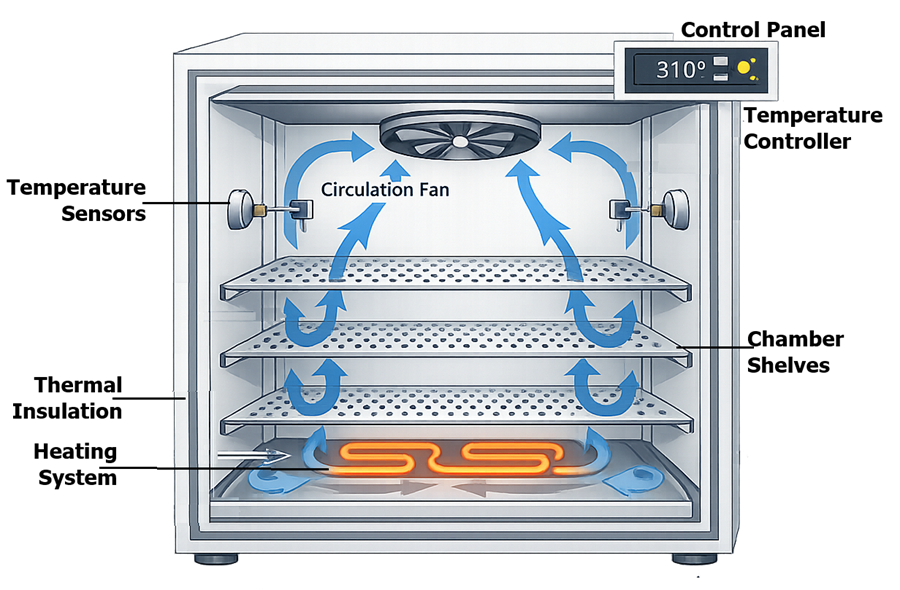
A laboratory incubator integrates the heated chamber, airflow path, control sensor, controller, shelves, monitoring interface, and protective overtemperature device.
The inner chamber should be compatible with the intended cleaning and disinfection procedures. Corners, seams, shelf supports, fan covers, ducts, and sensor penetrations should be accessible or otherwise controllable.
An inner glass door may allow observation while reducing the thermal disturbance created by opening the insulated outer door. It does not eliminate disturbance, particularly if the glass door is also opened during routine handling.
Warm-Room Architecture
A walk-in warm room usually consists of:
- Insulated or appropriately constructed room envelope
- Door assembly
- Heating equipment
- Recirculation or supply fans
- Air-distribution system
- Control sensors
- Independent monitoring sensors
- Temperature controller
- Overtemperature protection
- Local and remote alarms
- Electrical and network interfaces
- Racks, shelving, or floor-storage positions
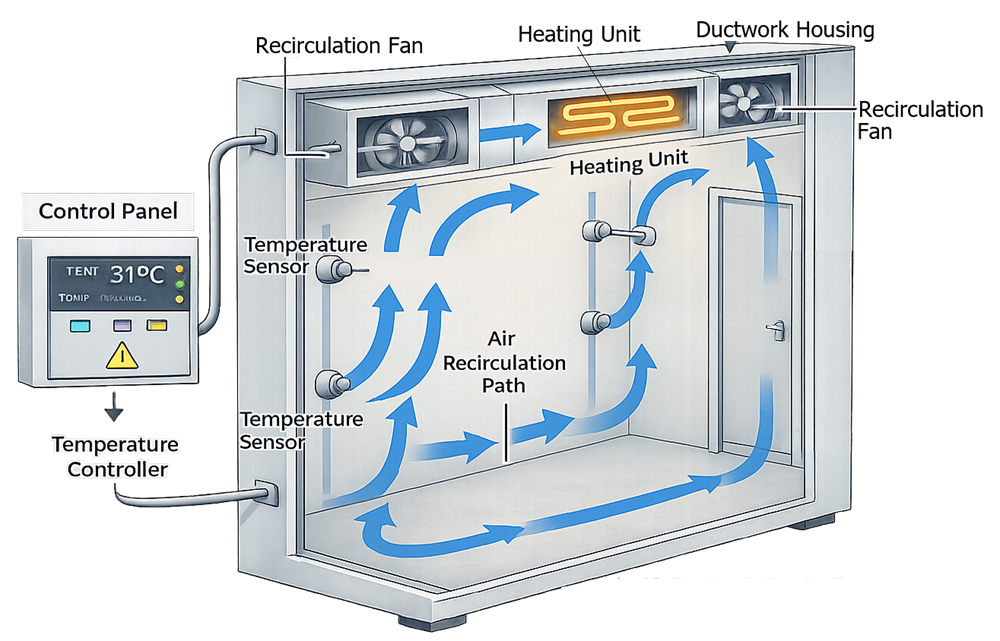
A warm room uses distributed heating, air circulation, controls, monitoring probes, and defined storage locations to maintain conditions across a room-scale volume.
The room envelope should be assessed for:
- Wall, ceiling, and floor construction
- Insulation
- Door seals
- Penetrations
- Surface cleanability
- Heat loss
- Condensation risk
- Structural suitability
- Fire-protection interfaces
- Maintenance access
Warm rooms are not necessarily independent of surrounding HVAC conditions. Adjacent-space temperature, supply air, exhaust, pressure, and seasonal operation can affect the heat load and temperature distribution.
Heating and Temperature Control
Temperature may be controlled using on-off, proportional, proportional-integral-derivative, staged, or manufacturer-specific logic. A basic control loop includes:
- The control sensor measures chamber or room temperature.
- The controller compares the measurement with the configured setpoint.
- Heater output is increased, reduced, or stopped.
- Airflow distributes heat through the controlled volume.
- The cycle repeats as conditions change.
Temperature normally varies within a control band. The controller display represents the control-sensor value, not conditions at every shelf or room location.
Control performance should be evaluated for:
- Stability around setpoint
- Overshoot
- Undershoot
- Cycling amplitude
- Cycling frequency
- Response after startup
- Recovery after access
- Response to load changes
- Operation near the limits of the approved range
- Transition between heating and cooling where applicable
Excessive overshoot may be caused by heater capacity, sensor location, control tuning, low load, poor airflow, or residual heat after heater shutdown.
Airflow and Temperature Distribution
Temperature distribution depends on:
- Heating-element location
- Fan capacity
- Airflow direction
- Duct arrangement
- Chamber geometry
- Shelf construction
- Load density
- Container geometry
- Door location
- Control-sensor location
- Heat loss through the enclosure
- Heat generated by the load
- Surrounding ambient conditions
Potential temperature differences may occur:
- Between upper and lower shelves
- Between front and rear locations
- Near heaters
- Near supply outlets
- Near return-air openings
- Near doors
- In corners
- Behind dense loads
- Above or below solid shelves
- Near walls or ceilings
- Inside secondary containers
- Near moving equipment in shaking incubators
Forced airflow can improve mixing but does not guarantee uniformity. Air can bypass densely loaded areas or create localized conditions near discharge outlets.
Natural-convection systems may exhibit greater vertical temperature differences, but their actual acceptability should be established by mapping rather than assumption.
Loading and Usable Volume
Loading changes temperature distribution, airflow, thermal mass, and recovery.
Qualification and routine procedures should define:
- Approved shelf positions
- Shelf type
- Maximum loading height
- Maximum loading density
- Minimum wall clearance
- Clearance around airflow openings
- Prohibited areas near heaters
- Prohibited areas near control sensors
- Prohibited areas near monitoring probes
- Container arrangement
- Stacking limitations
- Use of secondary containers
- Maximum shaking-platform load
- Maximum warm-room storage height
- Aisle requirements
A full chamber does not automatically represent the most difficult condition. Dense loading may restrict airflow, while a lightly loaded incubator may show greater temperature overshoot or faster change during access.
Qualification should challenge credible approved configurations rather than an arrangement prohibited by routine procedures.
The usable volume may be smaller than the physical chamber. Mapping results, airflow restrictions, safety clearances, and operational access should be used to establish the qualified space.
Control, Monitoring, and Safety Sensors
Incubators may contain several sensors with different purposes.
Control Sensor
The control sensor provides feedback to the primary temperature controller and regulates heater or refrigeration operation.
Its location may be selected for control stability and does not necessarily represent:
- The warmest location
- The coolest location
- The most heavily loaded shelf
- The routine monitoring location
- The temperature inside a sample container
Independent Monitoring Sensor
An independent monitoring sensor provides surveillance and records used for alarm response, trend review, deviation assessment, or GMP documentation.
Its location should be based on:
- Mapping results
- Intended monitoring objective
- Approved loading
- Accessibility
- Protection from damage
- Stability across representative conditions
- Ability to provide meaningful warning
The absolute warmest or coldest point identified in one study is not automatically the correct permanent monitoring location.
Overtemperature-Protection Sensor
An independent overtemperature sensor or thermostat protects against uncontrolled heating if the primary control system fails.
It should be functionally independent to the extent required by the design. Independence should be evaluated for:
- Sensor
- Controller
- Relay
- Heater contactor
- Power supply
- Software
- Wiring
- Final shutdown action
A second temperature value displayed by the same primary controller may not constitute independent overtemperature protection.
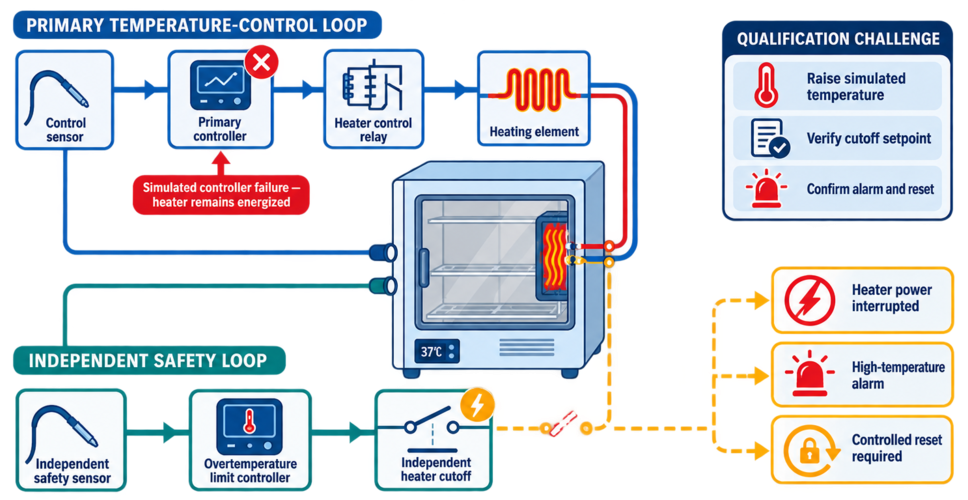
Independent overtemperature protection should detect an excessive-temperature condition and interrupt heater power without depending on the failed primary control loop.
Optional Humidity, CO₂, and Other Parameters
Additional parameters should be qualified when they are required by the intended use.
Relative Humidity
Humidity qualification may address:
- Generation method
- Control range
- Sensor range
- Sensor accuracy
- Distribution
- Recovery after door opening
- Water supply
- Reservoir level
- Condensation
- High- and low-humidity alarms
- Sensor drift
- Cleaning and sanitization
Humidity sensors can drift or become biased by condensation, contamination, chemical exposure, or prolonged high-humidity operation.
Temperature and relative humidity should be evaluated as separate measurements. A satisfactory temperature map does not establish acceptable humidity distribution.
Carbon Dioxide
CO₂ qualification may address:
- Gas supply
- Pressure regulation
- Gas flow
- Control range
- Sensor technology
- Sensor calibration
- Distribution
- Door-opening recovery
- High- and low-CO₂ alarms
- Supply failure
- Sensor failure
- Data recording
The qualification plan should specify whether gas concentration is expressed as volume fraction, partial pressure, or another defined basis and whether environmental pressure or altitude affects the measurement.
Oxygen or Controlled Atmosphere
Where oxygen is controlled, qualification may address:
- Oxygen range
- Sensor technology
- Gas supplies
- Purge sequence
- Recovery
- High- and low-oxygen alarms
- Gas failure
- Exhaust
- Personnel-safety interfaces
Agitation
Shaking incubators may require verification of:
- Speed
- Speed display
- Platform motion
- Timer
- Load restraint
- Imbalance detection
- Motor failure
- Alarm
- Restart behavior
- Electronic records
No optional parameter should be included in the approved qualification scope merely because the equipment can display it. The scope should follow intended use.
Independent Overtemperature Protection
An incubator or warm room can continue adding heat if the primary controller, control sensor, output relay, contactor, or software fails.
The protective system should prevent an uncontrolled high-temperature condition by:
- Detecting excessive temperature independently
- Interrupting heater operation
- Initiating an alarm
- Requiring controlled reset where specified
- Preventing automatic restart where unsafe
- Recording the event where applicable
Qualification should challenge the protection at a safe test condition that demonstrates the required response without damaging the equipment or creating unnecessary risk.
Testing should confirm:
- Protective setpoint
- Sensor response
- Heater interruption
- Alarm generation
- Controller indication
- Reset behavior
- Restart behavior
- Event recording
- Independence from the simulated primary failure
Adjusting the safety limit too close to the operating range may create nuisance trips. Setting it too high may fail to protect samples, materials, equipment, or personnel. The setpoint should be justified from intended use and system dynamics.
Doors and Access Recovery
Opening an incubator or warm-room door introduces surrounding air and changes temperature, humidity, CO₂, oxygen, or other controlled parameters.
Recovery depends on:
- Door-opening duration
- Number of openings
- Chamber or room volume
- Heater capacity
- Refrigeration capacity where applicable
- Fan operation
- Load
- Shelf arrangement
- Ambient conditions
- Inner-door use
- Controlled parameters
- Sensor location and response
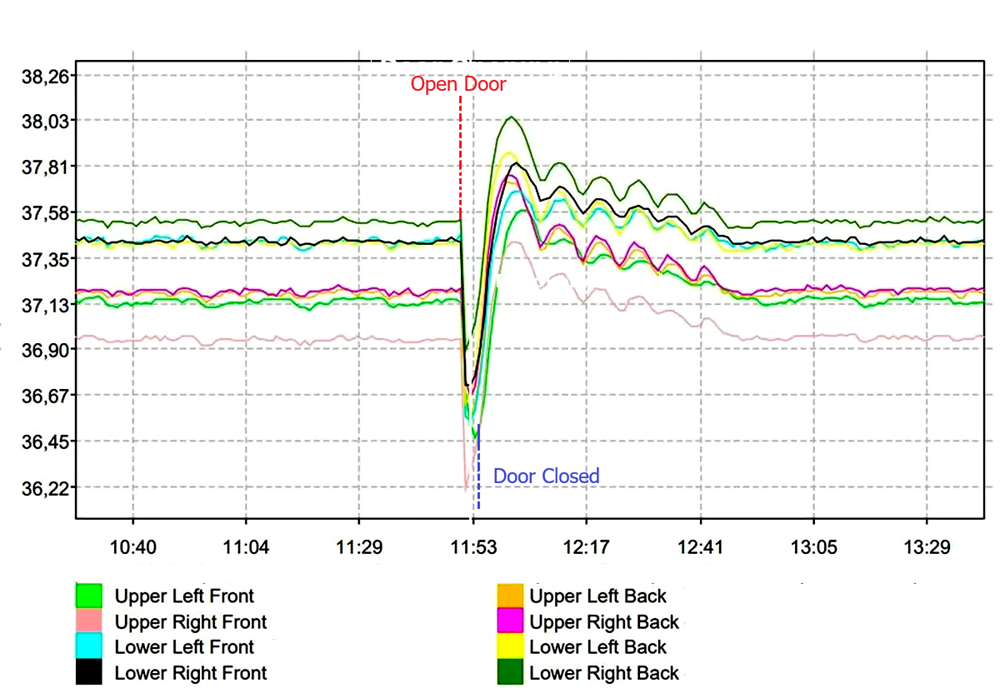
Door-opening testing evaluates the environmental disturbance created by representative access and the time required to return to the approved condition.
The test should define:
- Initial stabilized condition
- Load configuration
- Door used
- Door-opening duration
- Number of openings
- Simulated handling activity
- Measurement locations
- Controlled parameters evaluated
- Alarm response
- Recovery criterion
- Maximum acceptable recovery time
Recovery should not be defined only by the controller display returning to setpoint. Mapping sensors or independent monitoring data should be evaluated according to the study objective.
An unrealistic access test provides little value. The challenge should represent approved routine handling rather than an arbitrary opening duration.
Cleaning and Contamination Control
Incubators used for microbiological samples or cell culture can accumulate spilled media, condensate, dust, packaging debris, and microorganisms. Design assessment should consider:
- Interior materials
- Surface finish
- Rounded corners
- Removable shelves
- Removable fan covers
- Access to ducts
- Door-gasket cleanability
- Drainage
- Condensate collection
- Water pans or reservoirs
- Sensor protection
- Compatibility with disinfectants
- High-temperature decontamination cycle where provided
- VHP or other decontamination function where provided
Routine controls may include:
- Scheduled cleaning
- Spill response
- Water-pan cleaning
- Reservoir-water replacement
- Disinfection
- Inspection for condensation
- Inspection for corrosion
- Inspection for microbial growth
- Separation of incompatible samples
- Control of open plates or containers
- Load identification
- Status labeling
A manufacturer-provided high-temperature decontamination cycle should be qualified if it is relied upon as a GMP contamination-control function. Simply confirming that the cycle starts is insufficient.
Qualification may need to address:
- Cycle temperature
- Exposure time
- Distribution
- Cold locations
- Sensor accuracy
- Door locking
- Alarm behavior
- Recovery
- Material compatibility
Equipment decontamination-cycle qualification remains separate from microbiological method validation or process sterilization validation.
Warm-Room-Specific Considerations
Warm rooms introduce facility-scale considerations that may not apply to cabinet incubators. These include:
- Room envelope
- Door construction
- Personnel entry
- Emergency egress
- Racks and shelving
- Three-dimensional mapping
- Heating-unit placement
- Duct distribution
- Facility HVAC interaction
- Seasonal ambient conditions
- Fire-protection interfaces
- Emergency lighting
- Large material loads
- Material-handling equipment
- Multiple monitoring locations
- Contingency transfer
Personnel-safety requirements should be addressed separately from GMP product- or sample-protection requirements. Access control must not prevent emergency egress.
Warm-room mapping should evaluate the approved storage or operating volume rather than only the geometric center of the room.
Qualification Strategy
Qualification should demonstrate that the installed equipment, controls, sensors, alarms, load supports, procedures, and utilities collectively support the approved intended use.
The general lifecycle is addressed in Validation Life Cycle. Equipment-specific qualification should demonstrate that:
- The installed configuration matches approved requirements.
- Heating, refrigeration, fans, and optional controls operate correctly.
- Temperature distribution is acceptable throughout the usable volume.
- Optional humidity, gas, or agitation functions meet approved requirements.
- Door-opening recovery is acceptable.
- Alarms and protective functions operate correctly.
- Failure and restart behavior are understood.
- Required records are complete and retrievable.
- Cleaning and contamination controls are effective.
- Operating and contingency procedures are approved.
Vendor commissioning or testing may support qualification when its scope, methods, instruments, acceptance criteria, and documentation are adequate for the site’s intended use.
Design Review and Design Qualification
Design review should assess:
- Intended use
- Required operating range
- Chamber or room capacity
- Heating method
- Cooling method where applicable
- Convection type
- Airflow path
- Shelf or rack configuration
- Control-sensor location
- Monitoring-sensor provisions
- Independent overtemperature protection
- Alarm functions
- Door design
- Inner door where applicable
- Optional humidity control
- Optional CO₂ or oxygen control
- Agitation system
- Utilities
- Electronic records
- Configuration security
- Cleaning
- Decontamination cycle
- Maintenance access
- Backup power
- Contingency equipment
- Spare parts
- Vendor support
- Obsolescence
A vendor uniformity specification should not automatically replace site qualification. The vendor’s result may have been established at a different setpoint, load, shelf arrangement, ambient condition, sensor count, or study duration.
Installation Qualification
Installation Qualification should verify the approved installed configuration.
Typical checks include:
- Manufacturer
- Model
- Serial number
- Equipment identification
- Installation location
- Chamber or room dimensions
- Shelves and racks
- Heating components
- Refrigeration components where applicable
- Fans and ducts
- Control sensors
- Monitoring sensors
- Overtemperature sensor and controller
- Humidity system
- CO₂ or other gas system
- Agitation system
- Doors and seals
- Water supply and drain
- Gas supply and regulators
- Electrical supply
- Emergency-power connection
- Alarm outputs
- Network connections
- Software or firmware version
- Configured parameters
- Calibration status
- Manuals and drawings
- Cleaning instructions
- Preventive-maintenance requirements
For warm rooms, installation verification should also cover:
- Room envelope
- Penetrations
- Door operation
- Emergency release
- Lighting
- Rack layout
- heating-unit locations
- Supply and return openings
- Facility HVAC interfaces
- Fire-protection interfaces
The IQ record should distinguish observed configuration from information accepted from vendor documents.
Operational Qualification
Operational Qualification should challenge the critical functions and approved operating range.
Potential tests include:
- Startup
- Setpoint verification
- Temperature-control accuracy
- Heating operation
- Cooling operation where applicable
- Transition between heating and cooling
- Fan operation
- Fan failure
- Temperature mapping
- Door-opening recovery
- High-temperature alarm
- Low-temperature alarm
- Door-open alarm
- Power-failure alarm
- Sensor failure
- Communication failure
- Independent overtemperature shutdown
- Controller restart
- Power restoration
- Configuration security
- User access
- Electronic records
- Data retention
- Backup and recovery
- Humidity control
- CO₂ control
- Oxygen control
- Agitation
- Decontamination cycle
Testing should verify the complete alarm response path rather than only the local message.
21 CFR 211.68 requires automated equipment to be routinely calibrated, inspected, or checked under a written program designed to assure proper performance. Computerized functions supporting GMP records require appropriate controls and backup.
Temperature Mapping
Temperature mapping evaluates spatial and temporal temperature behavior throughout the defined chamber or room volume.
The study should consider:
- Equipment geometry
- Heating-element location
- Cooling-element location where applicable
- Airflow
- Convection type
- Shelves
- Racks
- Door
- Control-sensor location
- Monitoring-sensor location
- Load
- Operating setpoint
- Ambient conditions
- Study duration
- Sampling interval
- Measurement uncertainty
Potential sensor locations include:
- Upper, middle, and lower levels
- Front and rear
- Corners
- Near the door
- Near heaters
- Near airflow discharge
- Near return air
- Behind representative loads
- At the control sensor
- At the monitoring sensor
- Within the approved usable volume
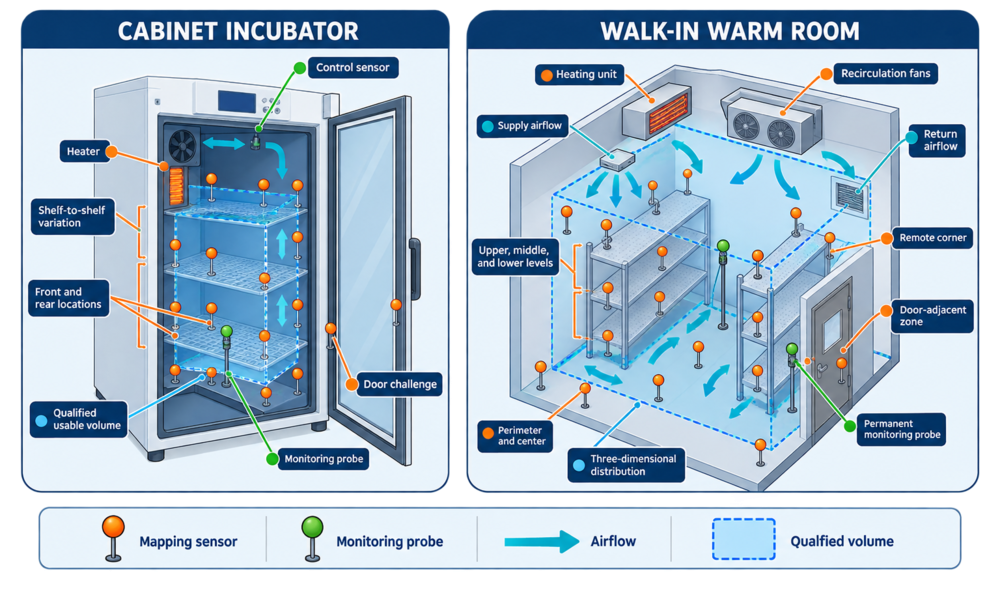
Incubator and warm-room mapping should represent shelf-to-shelf conditions, front-to-rear variation, vertical stratification, doors, heating sources, airflow, racks, and the approved usable volume.
No universal sensor count or study duration applies to every incubator or warm room.
The mapping period should capture relevant heating cycles, cooling cycles where applicable, agitation, humidity generation, gas-control behavior, and other operating states relevant to the intended use.
Logger selection, calibration, response time, sampling interval, time synchronization, drift, and uncertainty are addressed in Thermal Mapping Sensors, Data Loggers, and Measurement Uncertainty.
Empty and Loaded Mapping
Empty mapping can identify inherent chamber or room distribution without load obstruction. It may also challenge low thermal mass and temperature overshoot.
Loaded or representative-load mapping evaluates:
- Routine shelf arrangement
- Airflow obstruction
- Thermal mass
- Container geometry
- Sample density
- Door-opening practices
- Monitoring-probe suitability
- Recovery
- Heat generated by the load
The required study configurations should be justified from intended use. Empty and loaded studies should not both be required automatically when one configuration, supported by existing evidence, adequately represents the approved use.
Simulated loads should represent relevant airflow and thermal characteristics. Closed water bottles may provide thermal mass but may not represent agar plates, cell-culture vessels, open containers, insulated boxes, shaking flasks, or equipment stored in a warm room.
Load diagrams should identify:
- Shelf locations
- Container types
- Load density
- Clearances
- Mapping sensors
- Control sensor
- Monitoring probe
- Prohibited storage zones
Performance Qualification
Performance Qualification should demonstrate acceptable operation under approved routine or simulated-use conditions.
The scope may include:
- Representative load
- Approved shelf or rack configuration
- Routine door-opening pattern
- Typical handling activity
- Normal operating duration
- Independent monitoring
- Alarm response
- Optional humidity or CO₂ control
- Agitation where applicable
- Execution by trained operators
- Approved procedures
The number and duration of studies should be justified. A default requirement for three runs is not appropriate for every incubator or warm room.
Repeat testing should provide meaningful evidence based on:
- Intended use
- System variability
- Operating cycles
- Method duration
- Risk
- Development knowledge
- Existing OQ evidence
Equipment PQ should not be presented as validation of the microbiological method, biological process, or sample-incubation scheme.
Power Loss and Restart
Power loss may affect:
- Heating
- Refrigeration
- Fans
- CO₂ control
- Humidity generation
- Agitation
- Monitoring
- Alarms
- Data recording
- Network communication
- Lighting
- Warm-room door controls
Testing should define:
- Initial stabilized condition
- Load configuration
- Ambient conditions
- Duration or simulated duration
- Alarm response
- Monitoring continuity
- Data buffering
- Temperature behavior
- Gas or humidity behavior
- Controller restart
- Heater restart
- Fan restart
- Agitation restart
- Recovery criterion
- Contingency action
Automatic restart may be desirable for temperature control but inappropriate for a shaking platform or another moving function. Restart behavior should be defined by intended use and safety requirements.
Acceptance Criteria and Data Evaluation
Acceptance criteria should be approved before testing and traceable to requirements.
Potential criteria include:
- The installed equipment matches the approved design.
- Heating and cooling functions operate correctly.
- Fans operate in the approved state.
- Temperature remains within the approved criterion at required locations.
- The usable volume is supported by mapping results.
- Optional humidity or gas conditions meet approved requirements.
- Door-opening recovery meets the approved criterion.
- High- and low-temperature alarms operate correctly.
- Overtemperature protection interrupts heater operation.
- Sensor-failure response is acceptable.
- Power-restoration behavior is correct.
- Electronic records are complete and retrievable.
- Settings are protected from unauthorized change.
- Cleaning and decontamination functions meet approved requirements.
Data evaluation should address:
- Individual sensor results
- Spatial differences
- Vertical stratification
- Temperature cycling
- Overshoot
- Door-opening response
- Recovery
- Missing data
- Sensor drift
- Measurement uncertainty
- Optional parameter data
- Deviations
- Differences between controller and reference measurements
An average should not be used to conceal an unacceptable location. Mean kinetic temperature should not be used automatically to justify unsuitable incubation conditions.
Qualification Deviations and Release
Qualification deviations should be assessed for:
- Test validity
- Data integrity
- Effect on related tests
- Effect on usable volume
- Effect on monitoring location
- Effect on the method or process supported
- Root cause
- Corrective action
- Need for repeat testing
- Effect on release
Testing should not be repeated merely to obtain a passing result.
Release should occur only after:
- Required qualification work is complete
- Deviations are resolved or acceptably dispositioned
- Calibration is current
- Approved usable volume is defined
- Loading configuration is approved
- Setpoints and alarm limits are approved
- Monitoring probes are installed
- Overtemperature protection is functional
- Procedures are effective
- Operators and responders are trained
- Contingency equipment is available where required
- The final report is approved
- Quality approval is obtained where required
Routine Operation and Continued Verification
Routine controls may include:
- Approved operating setpoint
- Defined alarm limits
- Approved shelves or racks
- Loading restrictions
- Door-opening practices
- Continuous monitoring
- Daily or periodic review
- Alarm response
- Excursion investigation
- Cleaning and disinfection
- Water-pan maintenance
- Gas-supply checks
- CO₂ or humidity sensor calibration
- Fan inspection
- Door-seal inspection
- Heater inspection
- Overtemperature-device testing
- Preventive maintenance
- Backup verification
- Contingency-equipment checks
Trend review should consider:
- Temperature excursions
- Repeated alarms
- Slow recovery
- Increasing overshoot
- Sensor disagreement
- Fan failures
- Heater failures
- CO₂ or humidity drift
- Excessive gas consumption
- Condensation
- Repeated contamination
- Communication failures
- Missing data
- Calibration adjustments
- Maintenance history
Repeated self-correcting alarms may indicate deterioration even when the chamber returns to the approved range without intervention.
Excursions and Method Impact
An incubation excursion can affect equipment status and the validity of the laboratory test or process being supported.
The response should address:
- Event start and end
- Maximum and minimum value
- Duration
- Affected locations
- Samples or materials present
- Test stage
- Monitoring-data completeness
- Equipment condition
- Door history
- Power status
- Alarm history
- Immediate action
- Transfer to alternate equipment
- Method or process impact
- Root cause
- Corrective action
- Qualification impact
The equipment investigation and the scientific assessment of affected samples are related but separate.
Returning the equipment to its normal range does not establish that:
- Microbial recovery was unaffected
- Cell growth was unaffected
- A test remains valid
- A stability or hold study remains acceptable
- A conditioned material remains suitable
Disposition should follow the applicable approved method, protocol, stability information, and Quality procedures.
Calibration and Maintenance
Calibration should address instruments supporting control, monitoring, alarms, safety, and qualification.
The program should define:
- Instrument identity
- Measurement range
- Calibration points
- Accuracy requirement
- Tolerance
- Frequency
- Reference standard
- As-found result
- As-left result
- Adjustment
- Out-of-tolerance assessment
- Record retention
Calibration points should represent the approved operating and alarm ranges.
Maintenance may include:
- Heater inspection
- Fan inspection
- Refrigeration service
- Door adjustment
- Gasket replacement
- Shelf inspection
- Air-path cleaning
- Filter replacement where provided
- Water-system maintenance
- CO₂ regulator inspection
- Gas-line leak testing
- Shaker-drive maintenance
- Overtemperature-device testing
- Alarm testing
- Battery replacement
- Software maintenance
Maintenance should be assessed for qualification impact before return to GMP service.
Change Control and Requalification
Potential changes include:
- Relocation
- Change in intended use
- New operating temperature
- New incubation method
- New load type
- Shelf modification
- Rack modification
- Heater replacement
- Fan replacement
- Refrigeration repair
- Control-sensor replacement
- Monitoring-sensor replacement
- Overtemperature-device replacement
- Controller replacement
- Alarm-setting change
- CO₂ sensor or regulator replacement
- Humidity-system change
- Shaker-platform change
- Software or firmware update
- Monitoring-system change
- Decontamination-cycle change
- Warm-room layout change
- Extended shutdown
The impact assessment should determine whether existing evidence remains valid and whether additional verification is required.
Potential requalification may include:
- Installation verification
- Calibration
- Functional testing
- Alarm testing
- Overtemperature-protection testing
- Targeted mapping
- Door-opening recovery
- Representative-load mapping
- Optional parameter mapping
- Power-loss testing
- Decontamination-cycle verification
- Comprehensive requalification
A like-for-like designation should be supported by technical comparison. Matching a general component description does not establish equivalence of capacity, range, accuracy, response, materials, airflow, control behavior, software, or installation effect.
Repeated excursions, sensor drift, contamination, slow recovery, recurring fan failures, or adverse trends may trigger requalification even when no formal change occurred.
Risk-Based Requalification of GMP Equipment, Systems, and Utilities addresses the general trigger-to-scope decision process.
Common Qualification Weaknesses
Common weaknesses include:
- Assigning one incubation range to all microbiological applications
- Treating equipment qualification as validation of the test method
- Treating all incubator designs as equivalent
- Ignoring natural-convection stratification
- Assuming forced airflow guarantees uniformity
- Relying on the controller display as proof of distribution
- Failing to define the usable volume
- Mapping without representative shelves or loads
- Using a universal sensor count or study duration
- Omitting door-opening recovery
- Omitting operation near ambient temperature
- Omitting transition between heating and cooling
- Failing to verify independent overtemperature shutdown
- Treating a second display value as independent protection
- Omitting fan-failure testing
- Qualifying temperature but not required CO₂ or humidity
- Treating a water pan as active humidity control
- Ignoring condensation and reservoir contamination
- Omitting shaking speed and load balance
- Testing local alarm indication without remote notification
- Omitting power-restoration behavior
- Failing to assess automatic restart of moving equipment
- Repeating failed tests without investigating the cause
- Returning equipment to service after repair without impact assessment
- Failing to assess the supported test after an excursion
These weaknesses create gaps between equipment performance, controlled conditions, monitoring records, method execution, sample disposition, and the continuing qualified state.
Conclusion
Incubator and warm-room qualification should demonstrate that the installed enclosure, heating and cooling systems, airflow, sensors, controls, alarms, protective devices, monitoring systems, load configuration, and procedures collectively support the approved intended use.
A defensible program distinguishes gravity convection from forced airflow, cabinet incubators from room-scale systems, and basic temperature control from optional humidity, gas, or agitation functions. It maps the usable volume, evaluates representative loads and access, challenges alarms and overtemperature protection, verifies power-loss and restart behavior, and establishes clear release criteria.
Routine monitoring, cleaning, calibration, maintenance, excursion assessment, change control, and risk-based requalification then provide continuing evidence that the equipment remains suitable for its approved application without confusing equipment qualification with microbiological-method validation.